Restoring Core Strength, Comfort, and Dignity.

If you find yourself crossing your legs when you sneeze, planning your outings around where the nearest restroom is, or feeling a heavy, uncomfortable pressure in your pelvis after a long day on your feet, you are not alone.
You also do not have to accept it as your “new normal”.
Pelvic floor dysfunction affects millions of women across every season of life—from postpartum recovery in your 20s and 30s to the hormonal transitions of perimenopause and beyond. Yet, because symptoms touch on intimate topics like bladder control and sexual comfort, many women suffer in silence.
When they do gather the courage to mention it during a rushed 10-minute checkup, they are frequently dismissed with advice to “just do more Kegels” or told that changes down there are simply what happens after having children or getting older.
Pelvic health issues are not a personal failing, nor are they an inevitable consequence of aging. The pelvic floor is an intricate neuromuscular hammock supported by hormonal signaling, deep core dynamics, and structural connective tissue. Restoring comfort and stability begins with comprehensive medical evaluation and unhurried care.
Your pelvic floor is the quiet strength beneath your every move—care for it, and you’ll stand taller in every sense.
1. What the Pelvic Floor Actually Does
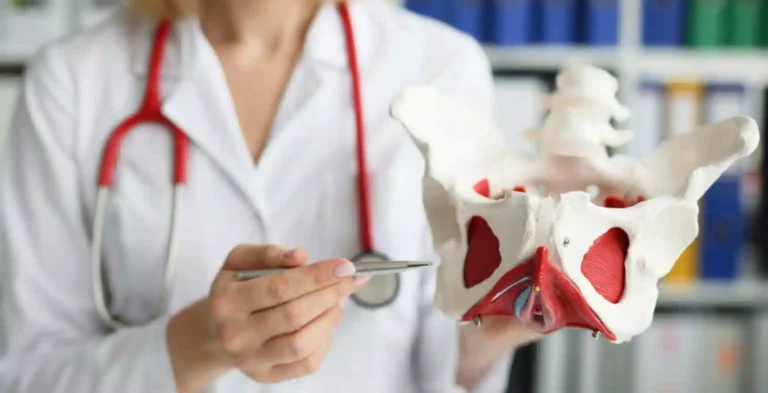
The pelvic floor is a sling of muscles, ligaments, and fascia stretching from your pubic bone in the front to your tailbone in the back. It supports vital daily functions:
- Organ Support: It forms the structural foundation that cradles your bladder, uterus, and bowel against gravity.
- Continence Control: It coordinates sphincter control to prevent accidental urinary leakage (stress incontinence) during coughing, laughing, lifting, or running.
- Core & Hip Stabilization: The pelvic floor works in direct synergy with your diaphragm, deep transversus abdominis, and lower back muscles to stabilize your spine and pelvis.
- Sexual Function & Blood Flow: Proper tone and healthy blood perfusion are essential for nerve sensitivity, comfort, and orgasmic function.
2. Common Signs of Pelvic Floor Imbalance
Pelvic floor issues do not always present as loose muscles; often, the pelvic floor is overly tight, contracted, and exhausted (hypertonic), which produces many of the same disruptive symptoms:
- Stress Urinary Incontinence: Involuntary bladder leaks when exercising, jumping, sneezing, or laughing.
- Urgency & Frequency: Feeling a sudden, uncontrollable need to urinate, or waking multiple times a night to empty your bladder.
- Pelvic Heaviness or “Bulging”: A sensation of downward pressure or fullness, which can signal early pelvic organ prolapse.
- Pain During Intimacy (Dyspareunia): Discomfort, dryness, or deep aching during or after intercourse.
- Persistent Lower Back or Sacroiliac (SI) Joint Pain: Deep stability muscles often overcompensate when pelvic ligaments are lax or imbalanced.
3. The Life-Stage Drivers: Why Pelvic Health Shifts
Pelvic floor wellness evolves across different chapters of womanhood:
Postpartum Recovery (20s–30s)
Pregnancy itself—independent of whether delivery was vaginal or cesarean—places immense mechanical load on pelvic ligaments and the pelvic nerve network. Without restorative core rehabilitation and micronutrient replenishment (ferritin, collagen co-factors), muscular weakness or scar-tissue restrictions can linger for years.
Perimenopause & Menopause (40s and 50s+)
The pelvic floor and lower urinary tract are densely populated with estrogen receptors. As estrogen production declines during midlife, the mucosal lining of the urethra and vagina thins, vascularity decreases, and collagen synthesis drops—a condition known clinically as the Genitourinary Syndrome of Menopause (GSM). What feels like a sudden bladder problem is often an underlying endocrine transition that can be managed with precision care.
4. Moving Beyond Generic Kegels: A Proactive Medical Approach
Blindly doing Kegel exercises can worsen symptoms if your pelvic muscles are already hypertonic, spasming, or out of alignment. Effective clinical management requires a coordinated strategy:
1. Unhurried Physician Consultation:
60 to 90 minutes of dedicated time with Dr. Roque to review your obstetric history, daily bladder habits, postural mechanics, and hormonal patterns in a private, supportive setting.
2. Hormone Assessment & Localized BHRT:
Evaluating systemic hormone levels alongside targeted bioidentical therapies (such as localized vaginal estradiol) to nourish tissue elasticity, support mucosal thickness, and quiet bladder urgency.
3. Collaborative Specialist Network:
Partnering directly with experienced pelvic floor physical therapists, urogynecologists, and imaging centers across South Tampa and St. Petersburg for targeted biofeedback and muscular retraining.
Standard Checkup vs. Our Comprehensive Pelvic Evaluation
Standard Annual Checkup
- 10–15 minute rushed visit; intimate issues avoided
- "Kegel exercises" suggested without assessment
- Ignores the link between hormones and bladder health
- Fragmented care with no follow-up coordination
Dr. Roque’s Women’s Health Approach
- 60–90+ minutes of private, unhurried physician time
- Differentiates between weak (hypotonic) vs. overly tight (hypertonic) pelvic floor
- Evaluates estrogen, thyroid, and tissue vitality together
- Direct physician coordination with top local pelvic PT specialists
Frequently Asked Questions
Can pelvic floor dysfunction improve without surgery?
Yes. The majority of pelvic floor issues—including mild to moderate stress incontinence, urgency, and core instability—respond favorably to conservative interventions, including specialized pelvic floor physical therapy, localized bioidentical hormone support, and neuromuscular retraining.
Why does perimenopause make my bladder feel so irritable?
Declining estrogen levels lead to thinning and decreased elasticity in the urethral and bladder tissues, which lowers the threshold for nerve irritation. Restoring local tissue vitality through individualized hormone therapy often resolves urinary frequency and nocturnal awakenings.
Reclaim Your Comfort and Confidence
You do not have to settle for discomfort, worry about bladder leaks, or let pelvic symptoms dictate your daily schedule. Dr. Marai Roque provides compassionate, unhurried women’s primary care, hormone optimization, and comprehensive health evaluations in South Tampa and St. Petersburg.